
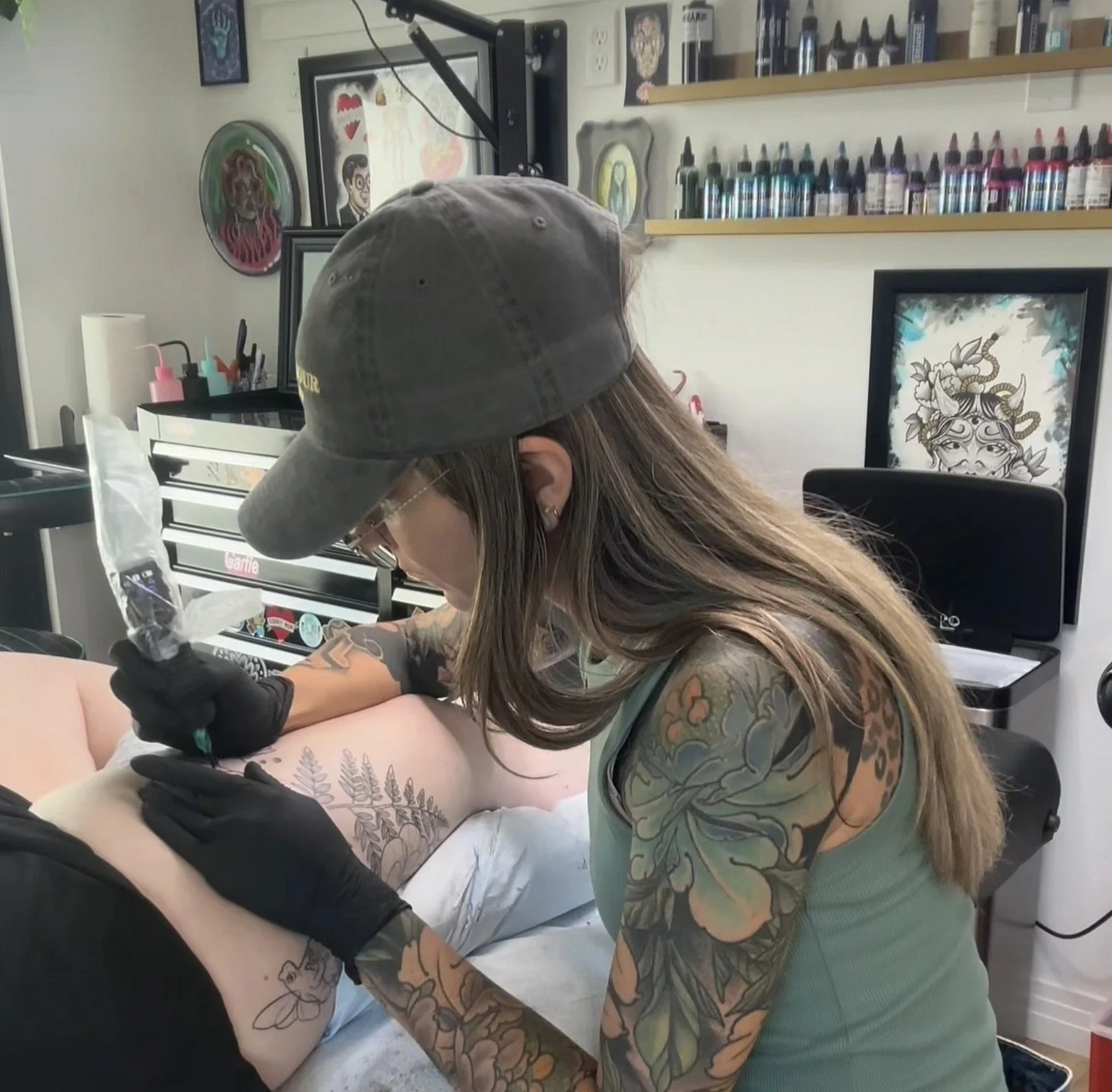
One of the most common questions we hear from first-timers is “What does getting a tattoo feel like?” and it is a fair one. If you have never been tattooed before, the uncertainty is completely normal. The sensation is manageable for most people and a lot easier to sit through than the anticipation suggests.
The Honest Answer: Yes, It Hurts, But Probably Not the Way You Think
Tattoos do cause discomfort. But the way most people imagine it, sharp and overwhelming, is rarely what actually happens. The sensation is more persistent than intense, and most clients find it easier to sit through than expected. A lot of first-timers walk out surprised by how manageable it was.
What Happens During Your Tattoo Session, Step by Step
Understanding the process takes away the mystery and makes each part feel less unexpected.
Skin Prep and Stencil Placement
Before any ink touches your skin, your artist cleans and shaves the area if needed, then applies a stencil of your design. This part is completely painless. You will review the tattoo placement together and confirm you are happy before anything starts. Speak up if something feels off.
Linework: The First Sensation You Will Feel
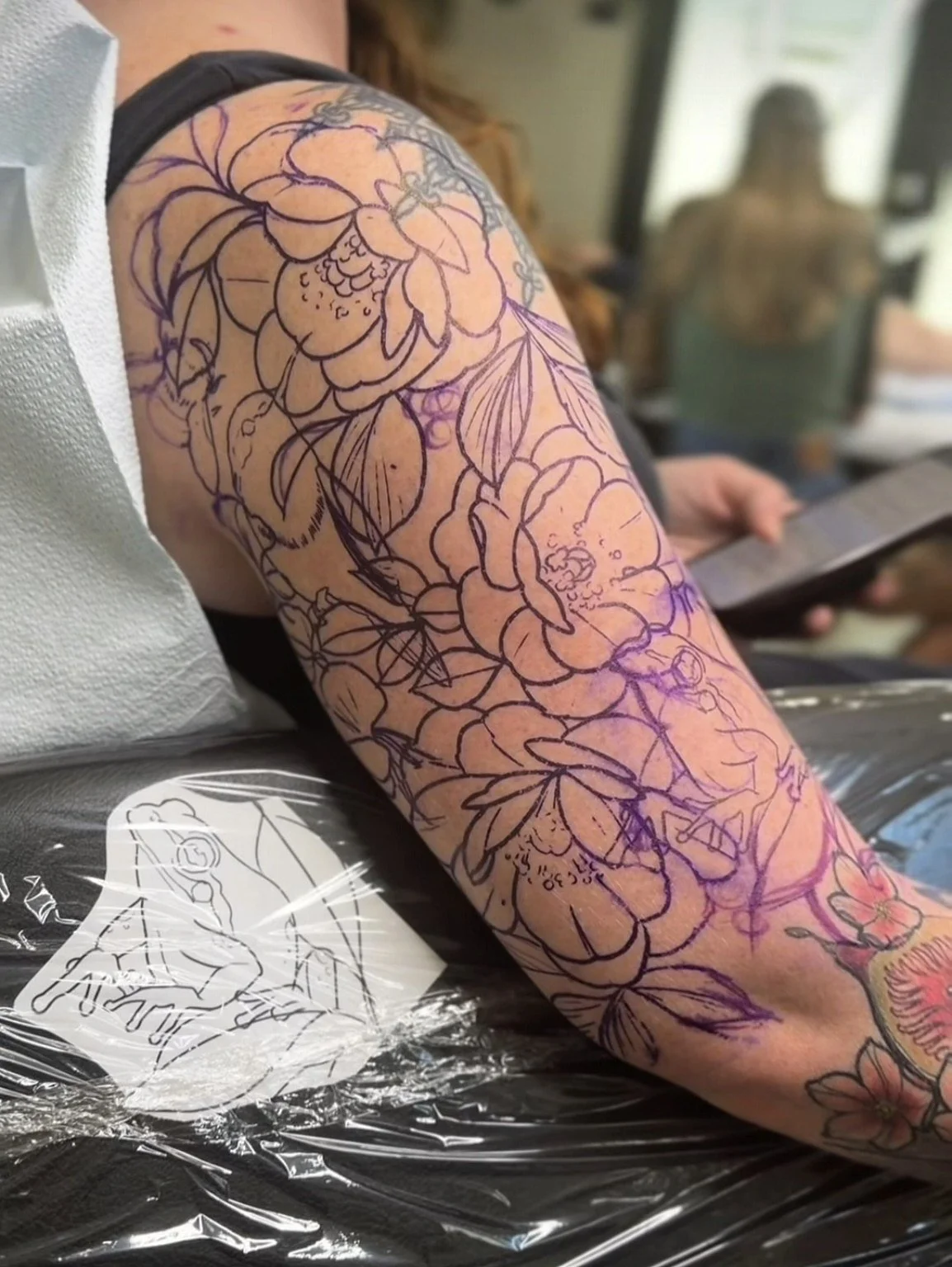
The first pass is linework, typically the sharpest part of the session. The needle moves in short, fast strokes, and the sensation is often described as a hot scratching sensation moving across the skin. Most people tense up for the first few seconds, then settle in. The outline defines the shape of your design and sets everything else up.
Shading and Color: How the Feeling Shifts
Once the outline is done, shading and color packing feel different. The motion becomes broader and more repetitive. Many people find shading easier to sit through than linework because the sensation is more of a dull, consistent vibration than a sharp scratch. Color packing in large areas can feel more intense toward the end of a long session.
The Wrap-Up and What Happens Right After
When your artist finishes, they clean the area, apply a protective covering, and go over aftercare with you. Right after, the skin feels warm and tender, similar to a mild sunburn. Some swelling and redness are normal and fade within a day or two.
How Does Tattoo Pain Actually Feel? Real Descriptions
Pain is personal, and the way people describe it varies. That said, certain descriptions come up again and again.
Common Ways People Describe It
The most frequent comparisons are a cat scratch, a sunburn being rubbed, and a hot rubber band snap. The scratching sensation is the most consistent description across placements. Some people note a burning sensation in spots where the artist works for an extended time. None of these are enjoyable, but none produce the kind of sharp, acute panic pain most people imagine.
How Adrenaline and Endorphins Change the Experience Mid-Session
Your body responds in interesting ways once a session gets going. The initial stress triggers adrenaline, which raises your pain threshold in the first few minutes. As the session continues, endorphins kick in, creating a noticeable drop in perceived pain and a calmer, more settled feeling, usually peaking somewhere around the 15 to 30 minute mark. That said, endorphins are finite. For longer sessions pushing past three to four hours, that buffer starts to wear off, fatigue sets in, and pain tolerance drops. Most people find the middle stretch of a long session the most comfortable, not the end.
Does Tattoo Style Affect How It Feels?
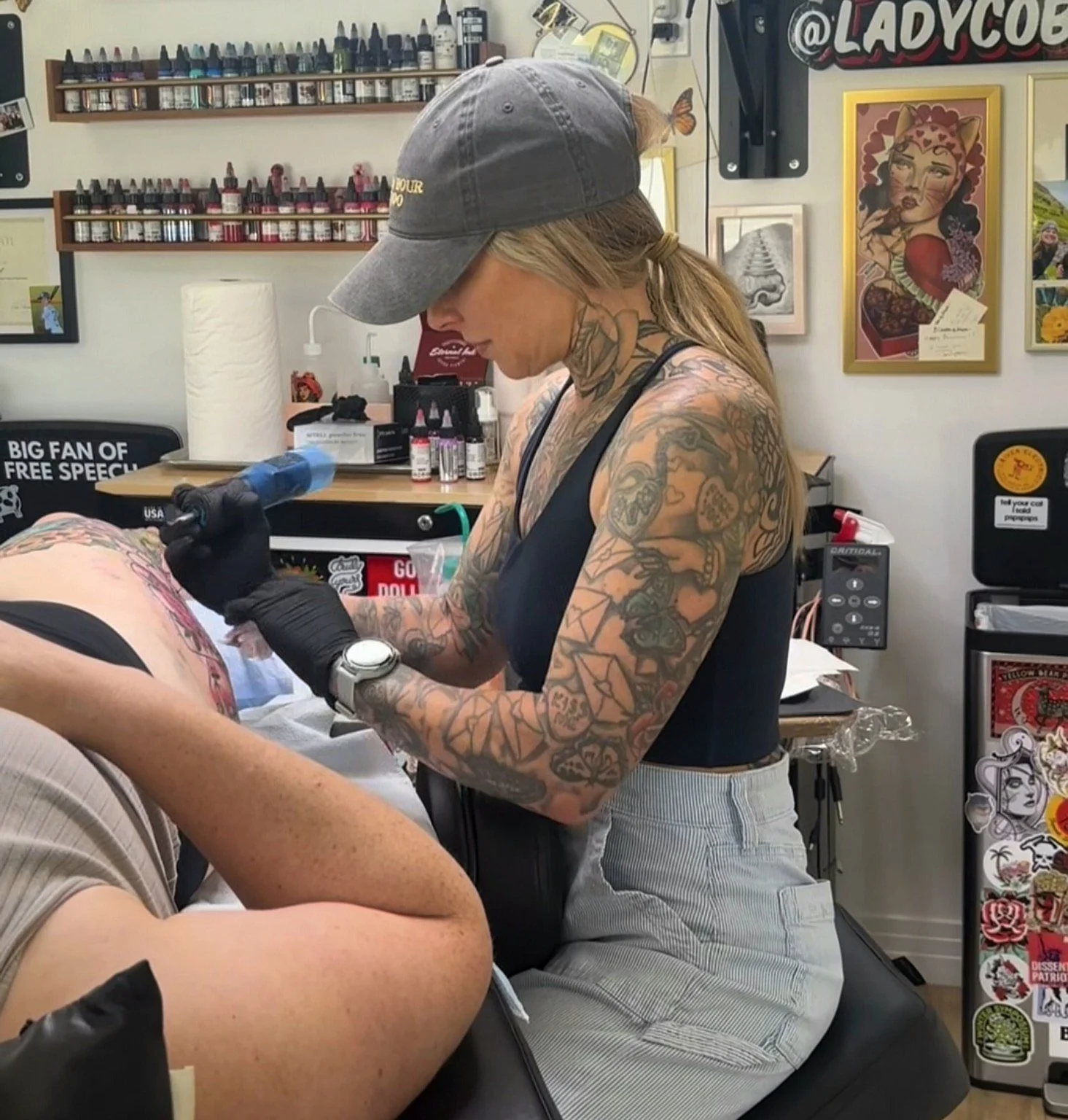
Yes, noticeably. The needles used, the technique applied, and the amount of time spent in any one area all affect how the session feels.
Fine Line Tattoos
A fine line tattoo uses a single needle or very tight grouping, producing a precise, concentrated sensation. Many people describe fine line as the sharpest feeling style. Sessions tend to be shorter, which helps offset the intensity.
Bold and Traditional Linework
Bold lines use a larger needle grouping and move faster across the skin. The sensation is broader and less concentrated than fine line work. Many people find bold lines easier to sit through because the pressure spreads across a wider area, feeling more like consistent pressure than sharp pain.
Heavy Shading and Color Packing
Heavy shading and color packing involve repeated passes over the same area. Skin becomes more sensitive as the session goes on and the cumulative effect builds. Short breaks help, and a good artist will check in during these stretches.
Where You Get Tattooed Changes Everything
Tattoo placement is one of the biggest factors in how a session feels. The difference between a comfortable area and a difficult one is significant.
Lower-Pain Placements: Outer Arm, Thigh, Calf
Fleshy areas with fewer nerve endings and no bone close to the surface tend to be the most manageable. The outer arm, thigh, and calf are consistently rated among the easiest spots. Enough muscle and tissue cushion the sensation, and these areas lack the dense nerve clusters that make other spots more intense.
Higher-Pain Placements: Ribs, Spine, Hands, Feet, Inner Arm
Bony areas and spots with dense nerve clusters are a different story. The ribs, spine, hands, feet, and inner arm are among the most cited high-pain placements. Over bony areas, needle vibration travels directly to the bone, creating a rattling sensation many find more uncomfortable than surface pain. Thin skin over joints offers less cushioning and more sensitivity.
Other Things That Affect Your Experience
Beyond placement and style, a few personal factors shape how a session goes.
Your Pain Tolerance and Headspace Going In
Pain tolerance varies between people, and there is no right or wrong threshold. Your mental state matters more than you might think. Anxiety amplifies discomfort. Clients who go in curious and relaxed consistently report better experiences than those braced for the worst.
How Much You Have Eaten and Slept
This matters more than most people expect. Going in hungry or sleep-deprived lowers your pain tolerance and makes you more likely to feel lightheaded. Eat a solid meal before your appointment, show up rested, and bring a snack for longer sessions.
Your Artist's Hand and Technique
An experienced artist works efficiently and minimizes unnecessary trauma to the skin. Good technique means clean passes, appropriate pressure, and knowing when a client needs a break. At Golden Hour Tattoo, all three of our artists prioritize client comfort alongside quality work.
What Does a Tattoo Feel Like While It Heals?
Once you leave, healing brings its own sensations. The first day or two, the area feels warm and tender, similar to a sunburn. Over the following days, itching takes over as the skin repairs itself. Your aftercare routine, keeping the area clean, moisturized, and out of the sun, directly affects how comfortable healing feels and how well the tattoo looks. For a full breakdown, check out our guide to the tattoo healing process.
Tips for Your First Tattoo Experience at Golden Hour Tattoo in Chico, CA
Golden Hour Tattoo is a women-owned tattoo shop in Chico that works by appointment only, meaning your session gets our full attention from start to finish. If you are preparing for your first tattoo experience, reach out before your appointment with any questions. Eat well, sleep well, wear clothing that gives easy access to the area, and trust the process. Book a consultation with one of our artists, and we will make sure you walk in ready.
FAQs
How painful is getting a tattoo?
Tattoo pain is real but manageable for most people. The sensation is more persistent than acute, often described as a hot scratching sensation that continues for the length of the session rather than a sharp, sudden pain. Placement makes a significant difference. Fleshy areas like the outer arm and thigh are much easier to sit through than bony areas or thin-skinned spots like the ribs or hands. Your pain tolerance, mental state, and how well you have prepared physically also factor in. Most first-timers say the anticipation was worse than the actual experience, and many find they can comfortably sit through a session once they settle in.
What does getting a first tattoo feel like?
Your first tattoo experience typically starts with some nerves, which is completely normal. Once the needle touches your skin for the first time, most people feel a sharp scratching sensation that eases as the session continues and adrenaline and endorphins kick in. The linework phase tends to feel the most intense, with shading often feeling like a broader, more manageable vibration. Many first-timers describe a mix of discomfort and excitement, especially as the design takes shape. Walking out with fresh ink for the first time is a genuinely memorable experience.
How painful is a tattoo on a scale of 1 to 10?
It depends heavily on placement, style, and the individual. On an easy placement like the outer forearm, most people rate the pain somewhere between a 2 and a 4. Medium placements like the upper arm or thigh typically fall in the 3 to 5 range. High-pain placements like the ribs, spine, or feet can push into the 6 to 8 range for many people. Fine line tattoo work tends to feel sharper and more precise, while bold lines often feel like broader pressure. These are rough averages, and individual experience varies quite a bit. The best predictor of your experience is talking to someone who has been tattooed in the same spot.
What does tattoo pain feel similar to?
The most common comparisons are a cat scratch, a sunburn being rubbed, and a hot rubber band snap. The scratching sensation is the most consistent description, especially during linework. During shading, many people describe it more as a dull vibration or a warm dragging feeling. In sensitive areas or during long sessions, a burning sensation can develop as the skin becomes more worked. Some people compare the feeling to a dental cleaning, uncomfortable but tolerable once you find a rhythm. Most agree it does not feel like the sharp, stabbing pain many imagine before their first session.