
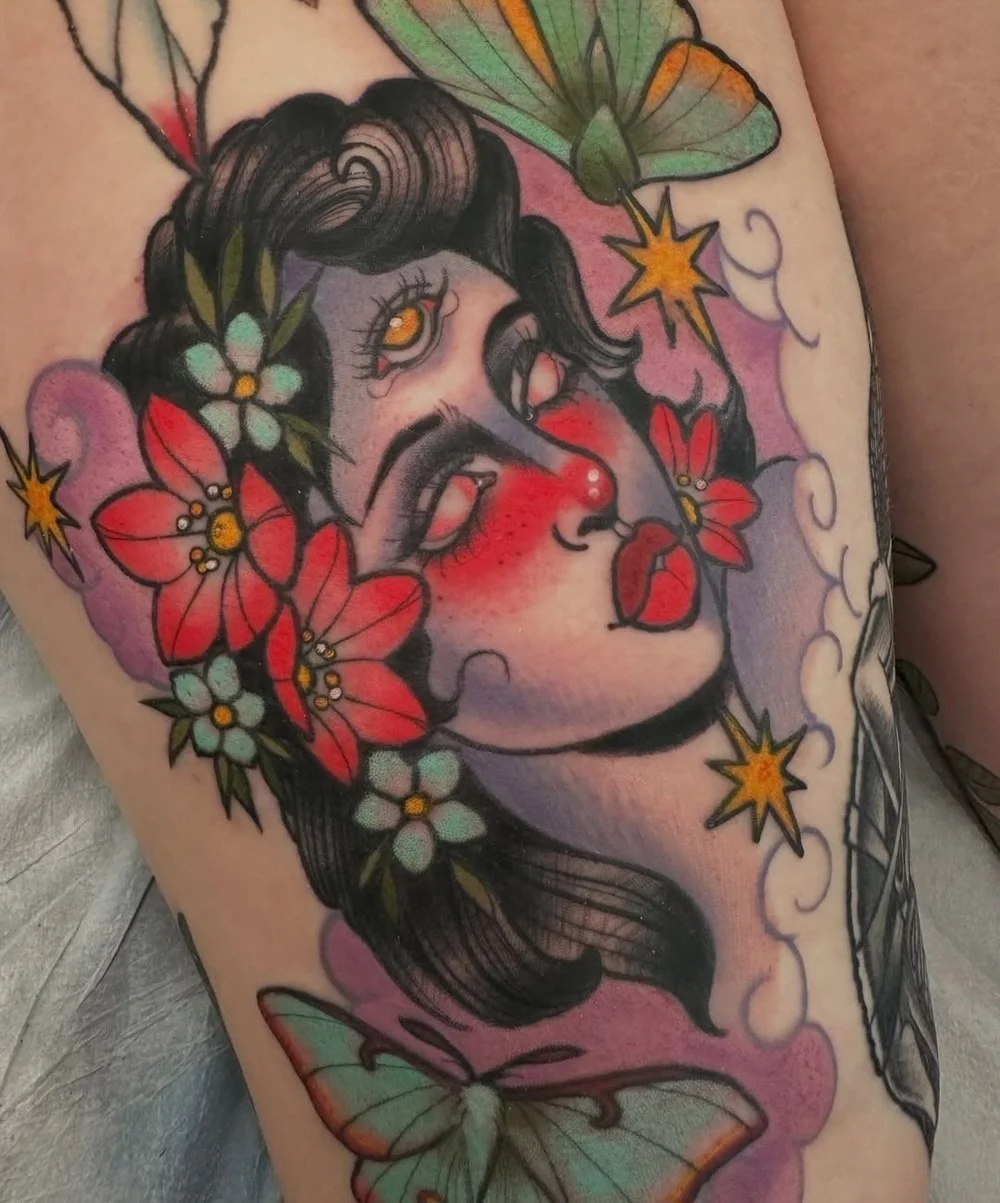
Tattoo styles have evolved across cultures and generations, each with a story of its own. Exploring the best tattoo styles and their origins gives you a deeper appreciation for the artistry behind different designs and what makes each one unique. When you understand where a style came from, what defines it, and what it represents, you're better equipped to choose artwork that reflects your personality and tells your story. This guide breaks down the major tattoo styles, their history, their defining traits, and how to find the one that fits you best.
What Makes a Tattoo "Style"?
A tattoo style is a distinct visual language. It is defined by the way an artist uses linework, shading, color, and subject matter to produce a recognizable look. Just as painting has impressionism and cubism, tattooing has its own movements, each shaped by geography, culture, technology, and the artists who pushed the craft forward. Understanding the different types of tattoo styles helps you have a more informed conversation with your artist and walk away with something that genuinely fits you. Some styles developed over centuries in isolated communities. Others emerged in the last few decades as tattoo culture went mainstream. All of them reflect something real about the people who created and carry them.
Timeless Classics: The Traditional Styles
The oldest and most established tattoo styles form the foundation of the craft. These are the styles that built the industry and continue to define what many people picture when they think of a tattoo.
American Traditional (Old School)
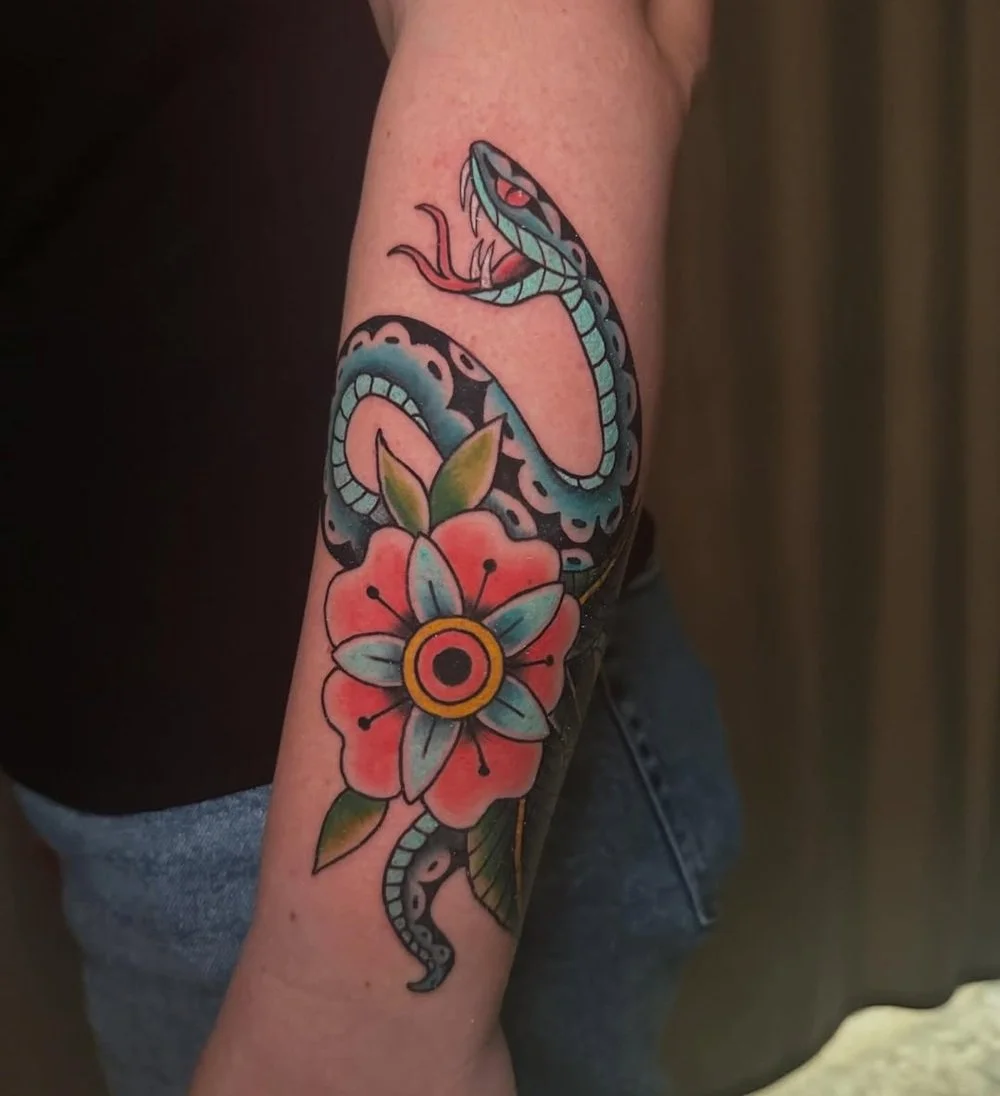
American Traditional is the style that defined tattooing in the United States for most of the 20th century. Its roots trace to the late 1800s and early 1900s, when sailors, soldiers, and working-class Americans began collecting tattoos as marks of identity, loyalty, and luck. Artists like Norman Collins, better known as Sailor Jerry, standardized the look: thick black outlines, a limited palette of bold colors, and imagery drawn from nautical life, nature, and patriotism. Eagles, anchors, roses, daggers, and swallows remain the iconic subjects of this style. The bold construction means these traditional tattoos age exceptionally well, holding their shape and color for decades. Mel Presson at Golden Hour Tattoo specializes in American Traditional, with bold linework and solid color work that honors the roots of the style.
Neo-Traditional
Neo-Traditional grew out of American Traditional starting in the 1970s and accelerated through the 1980s and 1990s as tattooing attracted artists with fine art backgrounds. The style keeps the strong linework of its predecessor but expands dramatically in subject matter, detail, and color range. Neo-Traditional tattoos often incorporate elements from illustration, Art Nouveau, and decorative arts. Portraits, animals, botanicals, and fantasy imagery appear frequently, rendered with more dimension and nuance than classic Old School work. At Golden Hour Tattoo, Monica Painter specializes in neo-traditional work with a focus on nature-inspired color pieces.
Japanese (Irezumi)
Japanese tattoos, known collectively as Irezumi, have one of the longest and most documented histories of any tattoo style in the world. Origins stretch back to at least the 17th century, when tattooing served both as punishment and as decoration among the working class. By the 18th and 19th centuries, woodblock print imagery had deeply influenced the aesthetic, giving rise to the flowing compositions, bold outlines, and rich symbolism that define the style today. Japanese tattoos feature iconic subjects including koi fish, dragons, tigers, peonies, chrysanthemums, and waves. The designs are meant to work with the human body rather than against it, using negative space and flowing shapes to complement musculature and movement. Large-scale coverage, including full sleeves, back pieces, and bodysuits, is a defining tradition.
Tribal
Tribal tattooing predates every other style on this list by thousands of years. Indigenous communities across Polynesia, Southeast Asia, the Americas, and Africa developed their own tattooing traditions long before contact with Western culture. Polynesian tribal work, which includes Māori ta moko and Samoan pe'a, uses bold black ink geometric patterns to communicate lineage, social status, and spiritual beliefs. Each design is meant to be specific to the individual. Filipino, Dayak, and Native American traditions each carry their own distinct visual systems. Today, tribal tattooing spans a wide spectrum from culturally specific custom work to more generalized geometric black ink designs inspired by these traditions.
Lifelike Legends: Realism-Based Styles
Realism-based tattooing draws on fine art traditions to reproduce the world with photographic accuracy. These styles demand high technical skill and work best with experienced artists who understand light, shadow, and texture.
Realism
Realistic tattoos emerged most clearly as a recognized style in the 1980s as artists began pushing the limits of what skin could hold. The goal is to recreate subjects, most often portraits, animals, and objects, with the same depth and accuracy as a photograph. Realism tattoos rely on precise shading, careful blending, and a deep understanding of how ink behaves in skin over time. The best realism artists develop a strong technical foundation in drawing and painting before transferring those skills to tattooing. Color realism and black and grey realism are both practiced widely, each with its own technical demands.
Black and Grey
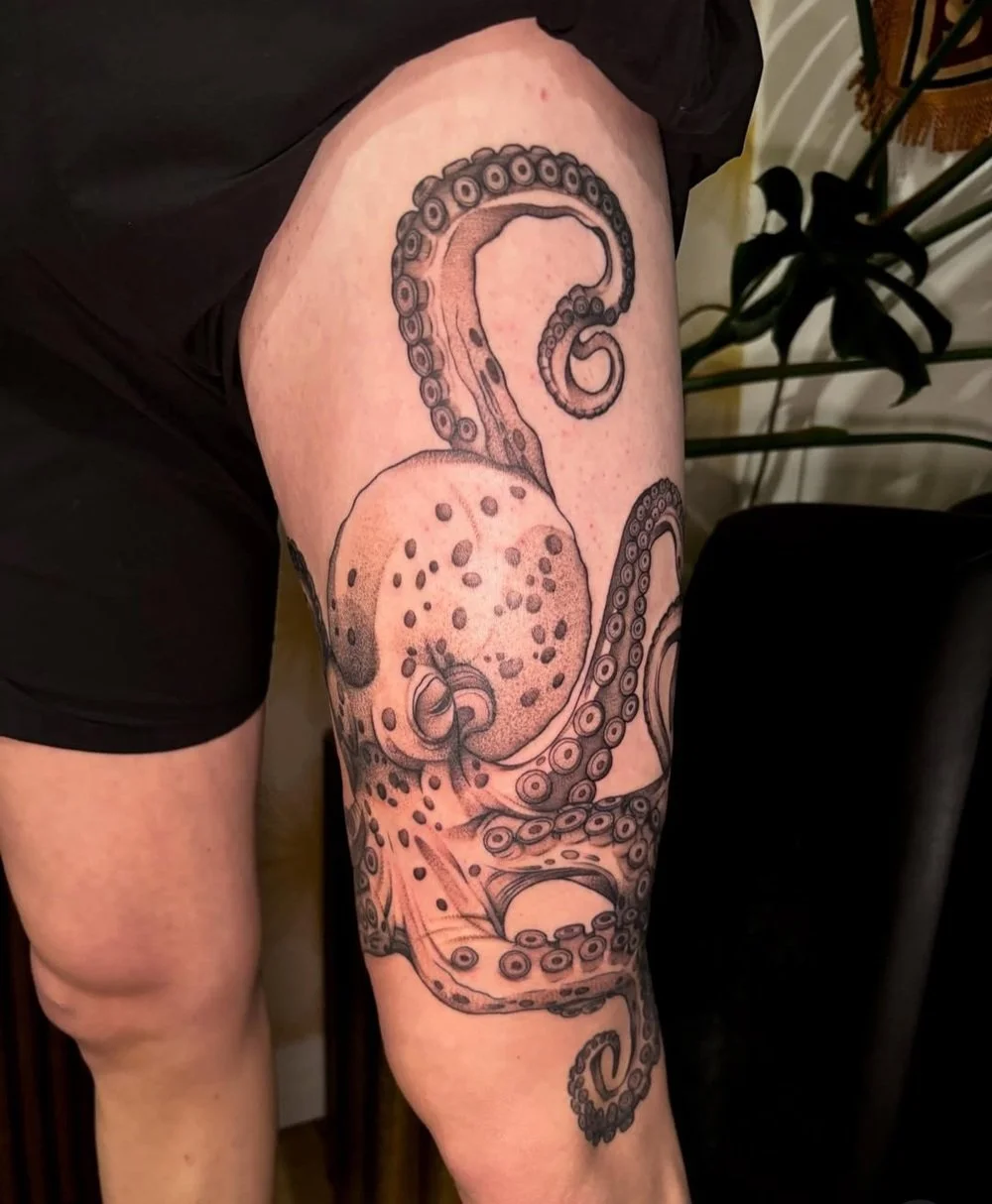
Black and grey tattooing developed in the prisons of East Los Angeles in the 1970s, where inmates worked with limited supplies and created a technique of diluting black ink or using graphite to build tonal variation. The style migrated to tattoo shops through artists in the Chicano community and spread rapidly through Southern California before going national. Black and grey tattoos use ink wash techniques to create smooth gradients and soft shadow, producing an almost photographic quality without the use of color. The style pairs beautifully with portraiture, religious imagery, wildlife, and fine detail work. Kaylen Parcell at Golden Hour Tattoo works in black and grey realism and fine line.
Chicano
Chicano tattooing grew out of the same East Los Angeles community that gave rise to black and grey, but it carries its own distinct cultural identity. Developing from the 1940s onward within Mexican-American communities, the style reflects a rich visual tradition drawing on Catholic iconography, lowrider culture, family portraiture, iconic payasa (clown-face) portraits, and old English script lettering. Sacred hearts, La Virgen de Guadalupe, roses, and faces rendered with fine lines and delicate shading are hallmarks of the style. Chicano tattooing is deeply tied to personal and community identity, and the best work in this style balances technical precision with genuine cultural connection.
Artistic and Modern Styles
The past few decades have produced entirely new visual languages in tattooing, driven by social media, single-needle techniques, and artists who came to tattooing from backgrounds in illustration and graphic design. Modern tattoos in these styles look unlike anything that came before, and they continue to evolve quickly.
Fine Line
Fine line tattooing is one of the fastest-growing tattoo styles in the industry today. Built around a single needle or tight needle groupings, the style produces delicate, precise lines and minimalist designs that look almost like they were drawn directly onto the skin with a fine-tipped pen. Fine line work often features botanical illustrations, small portraits, abstract shapes, and handwritten-style lettering. The style suits clients who prefer a more subtle or understated look. Placement matters enormously with fine line work, since thinner lines can spread or fade in high-friction or high-sun areas over a long time. Kaylen Parcell also works in fine line and portrait styles.
Watercolor
Watercolor tattoos emerged as a recognizable style in the 2000s, inspired by the loose, expressive qualities of watercolor painting. The style mimics the look of paint on paper, with color that bleeds softly at the edges, loose brush-like strokes, and a bright, almost luminous quality. Watercolor tattoos often lack traditional black outlines, which gives them an airy, painterly feel. The tradeoff is longevity. Without a strong outline anchoring the design, some watercolor tattoos can fade or blur faster than styles with heavier linework. Many artists now combine watercolor elements with black linework to get the visual effect while building in more structural durability.
New School
New School tattooing took shape in the 1970s and 1980s as artists began incorporating influences from graffiti, cartoon art, and comic illustration into their work. The style is defined by exaggerated proportions, vivid color, thick outlines, and a sense of playfulness that sets it apart from more traditional aesthetics. New School designs often feature caricature-like characters, pop culture references, and surreal or whimsical subject matter. The heavy color saturation and bold line structure give New School tattoos strong longevity, though the style has a specific visual personality that works best for clients who want something genuinely bold and eye-catching.
Bold and Graphic Styles
Some tattoo styles prioritize graphic impact over representational detail. These approaches use strong contrast, pattern, and form to create designs that read powerfully from a distance.
Blackwork and Dotwork
Blackwork is a broad category that encompasses tattoos made primarily or entirely with solid black ink. The style draws from tribal traditions, graphic design, and contemporary illustration. Large black fills, bold geometric shapes, and heavy contrast are defining features. Dotwork is a related technique that builds tone and texture through patterns of small dots rather than solid fills or smooth shading. Together, these approaches produce tattoos with a striking graphic quality. Blackwork suits clients drawn to bold, high-contrast aesthetics and works well for cover-ups due to the density of ink involved.
Script and Lettering
Script and lettering tattoos have existed as long as tattooing itself, but they have grown into a distinct specialty in the modern era. The range is enormous, from simple printed words to elaborate custom calligraphy, old English lettering, typewriter fonts, and entirely hand-drawn scripts. Placement and sizing are critical with script work, since letters that are too small or placed in high-movement areas tend to blur over time. A skilled lettering tattoo artist understands spacing, kerning, and how ink spreads in skin, and can design text that holds its legibility for years.
Geometric
Geometric tattooing draws on both ancient symbolic traditions and contemporary design aesthetics. Sacred geometry, mandalas, and precise mathematical forms have been used in spiritual and artistic contexts across cultures for thousands of years. In tattooing, geometric designs use clean lines, precise angles, and symmetrical patterns to create tattoos with a modern, architectural quality. The style pairs well with blackwork techniques and also appears frequently in combination with realism and dotwork, where geometric frames or backgrounds surround a central representational image.
How to Choose the Right Style for You
With so many kinds of tattoos available, narrowing down your options comes down to a few practical questions about how you want your tattoo to look, where you want it, and how it will hold up over the years.
Aging, Placement, and Personal Meaning
Not all tattoo styles age at the same rate. Bold styles with thick outlines, like American Traditional and Japanese, tend to hold their shape and color for decades. Finer styles, like single-needle fine line and watercolor, require more thoughtful placement to preserve their detail over a long time. High-friction areas like hands, feet, and inner fingers cause faster fading in any style. Sun exposure accelerates color loss across the board. Beyond durability, consider what you want the tattoo to communicate. Some styles carry deep cultural history and personal significance. Others are chosen purely for their visual appeal. Both are valid starting points.
Why a Specialized Tattoo Artist Matters
Every tattoo style has its own technical demands, and a tattoo artist who excels in one style may not produce their best work in another. Reviewing an artist's portfolio specifically for examples of the style you want is essential. At Golden Hour Tattoo, each of our artists brings deep expertise in specific styles. Monica Painter works in neo-traditional and color illustration. Kaylen Parcell specializes in black and grey realism, fine line, and portraits. Mel Presson is our American traditional specialist. Matching your vision to the right artist makes a significant difference in the finished result.
Find Your Tattoo Style at Golden Hour Tattoo
Golden Hour Tattoo is a women-owned tattoo shop in Chico, CA, working by appointment to give every client focused, personalized attention. Whether you already know the style you want or are still figuring it out, our artists are here to help you make the right call. Browse our artists' portfolios, reach out with questions, and when you are ready, book a consultation. If you want to know more about what happens after you get inked, check out our guide to the tattoo healing process. We look forward to working with you.
FAQs
What are the most popular tattoo styles?
American Traditional, Japanese, and fine line are consistently among the most requested styles at shops across the country. American Traditional remains a staple because of its bold construction and proven longevity. Japanese tattooing draws clients who want large-scale, highly symbolic work with a rich cultural history behind it. Fine line has surged in popularity over the last decade, driven by social media and a preference for subtle, minimalist designs. Black and grey realism and geometric styles also rank among the popular tattoo styles right now. Trends shift over time, but these styles have shown real staying power in the industry.
Which tattoo style is best for a first tattoo?
American Traditional and neo-traditional styles are often recommended for first tattoos because their bold linework holds up well over time and the designs read clearly even as the skin changes. Fine line work is also popular for first-timers who prefer something smaller and more understated. The most important factor is choosing a style that genuinely reflects your taste rather than following a trend you might feel neutral about in a few years. Talk to your artist about what placements and sizes make the most sense for the style you are considering. A good consultation goes a long way for a first piece.
What tattoo styles age the best?
American Traditional ages the best of any tattoo style, largely because of its thick outlines and solid color fills. Japanese tattooing also holds up exceptionally well for the same structural reasons. Black and grey work, when done with proper technique, maintains its tonal depth for decades. Styles that tend to fade faster include watercolor tattoos, which lack the anchoring structure of black outlines, and very fine line work in high-friction placements. Proper aftercare, sun protection, and occasional touch-ups extend the life of any style. Placement is just as important as style when it comes to longevity.
What is the oldest tattoo style?
Tribal tattooing is the oldest documented tattoo tradition in human history. Archaeological evidence of tattooing dates back over 5,000 years, with the oldest known tattooed human being Otzi the Iceman, found preserved in the Alps with 61 tattoos composed of simple lines and dots. Polynesian, Egyptian, and various indigenous tattooing traditions predate any of the styles that emerged from Western tattoo shop culture. Japanese Irezumi, while younger than tribal traditions, has one of the longest continuous histories of any recognizable tattoo style, with documented roots stretching back several centuries.
How do I choose the right tattoo style for me?
Start by collecting reference images of tattoos you are genuinely drawn to, without filtering by style name. Once you have a group of images, patterns usually emerge. Most people find they gravitate toward a consistent aesthetic without even realizing it. From there, research which artists specialize in that look and review their portfolios carefully. Think about placement, since some styles suit certain body areas better than others, and consider how much detail you want at the size you are planning. Talking directly with a tattoo artist during a consultation is the most reliable way to get honest guidance on what will work for your body and your vision.